

Have you seen Gary Farmer’s work on the brilliant series Reservation Dogs? The man is incredible — hilarious and fearless — as the hermit Uncle Brownie. (The editorial staff of Weekly Neil [me] highly recommends the show.) He’s also a harmonica player and blues singer in his band The Troublemakers, which has performed near me a handful of times. I’ve never gone but have always been tickled by how this immense screen talent is playing music a stone’s throw from where I live. Kevin Bacon and Kiefer Sutherland have done the same and for the record I haven’t gone to those shows either.
But those guys aren’t Gary Farmer. There’s only one Gary Farmer.
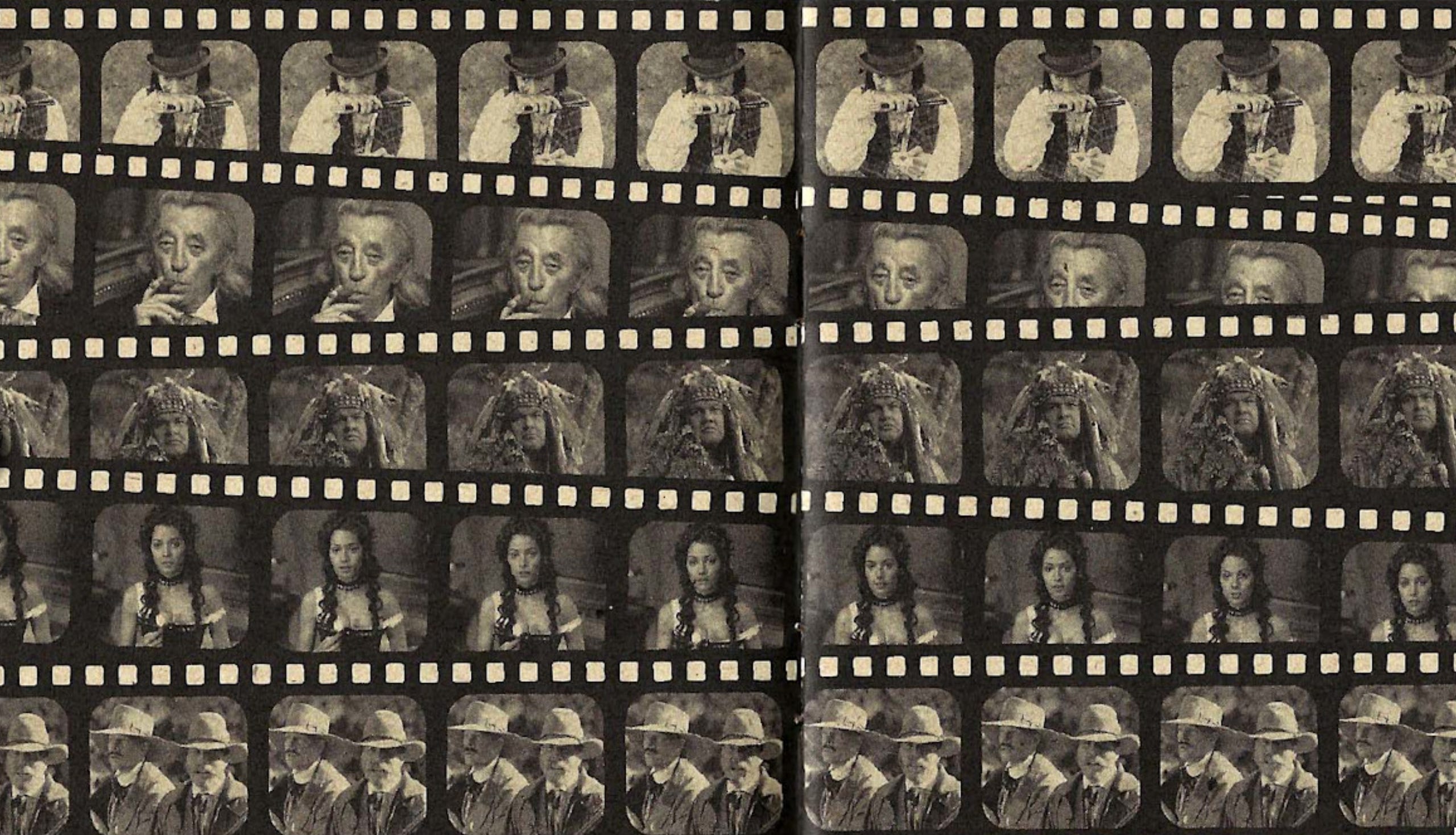
I first saw Gary Farmer in Jim Jarmusch’s 1995 film Dead Man, a dark and cerebral Western where he plays opposite Johnny Depp. Depp, as an accountant named William Blake, kills a guy and spends the rest of the film hunted (and haunted). Gary Farmer, as an Indigenous exile named Nobody, does not understand how two white men can have the same name, leading to long discussions of identity and quoting of Romantic poetry. Frankly I can’t believe I’ve never written about Dead Man in detail before but I guess now’s as good a time as any.
Neil did the soundtrack. Admittedly that’s a weak verb to use for the wild process he actually undertook to make the damn thing. Here’s what he did because he’s insane.
Jarmusch had the idea. “I’d been a big fan of Neil Young’s music but most particularly his electric guitar playing and his work with Crazy Horse, his band, which is his most wild side of Neil’s music,” he explained in 2014. Jarmusch arranged a meeting in Arizona during the shooting of the film. Neil did not disappoint. “He said, ‘Yeah yeah, I heard you want to talk about your film. Have you finished it yet?’ And I said no, we’re still shooting it. And he said, ‘Well, I don’t plan anything, so here’s what you do. When you have a rough cut of the film, send it to me and I’ll get back to you very soon, I promise you. But I don’t know — reading a script, it doesn’t mean anything to me.’”
Jarmusch finished the film and sent it to Neil. A day or two later, Neil called him and asked him to fly out and stay on his ranch so they could talk about the film. Jarmusch brought up Eric Clapton’s title score for the film The Hit and said he wanted to do something similar. Neil, apparently, had considered asking Krist Novoselic and Dave Grohl — the surviving members of Nirvana — to work on something with him. But by the next day, he’d changed his mind. He was going to do it himself.
They went to San Francisco, got a warehouse and converted it to a recording studio. The film played on a large screen, and Neil played his trusty electric guitar Old Black along to it. But not just Old Black. He strummed on an acoustic. He utilized a pump organ. He had monitors everywhere playing the film so even if he looked away or walked a few steps to grab another instrument he couldn’t escape it. He conjured some themes over the action of the film, some of which he had already played for Jarmusch, much to the latter’s enjoyment. He did this three times until he felt he had enough material for the score. And that’s Dead Man.
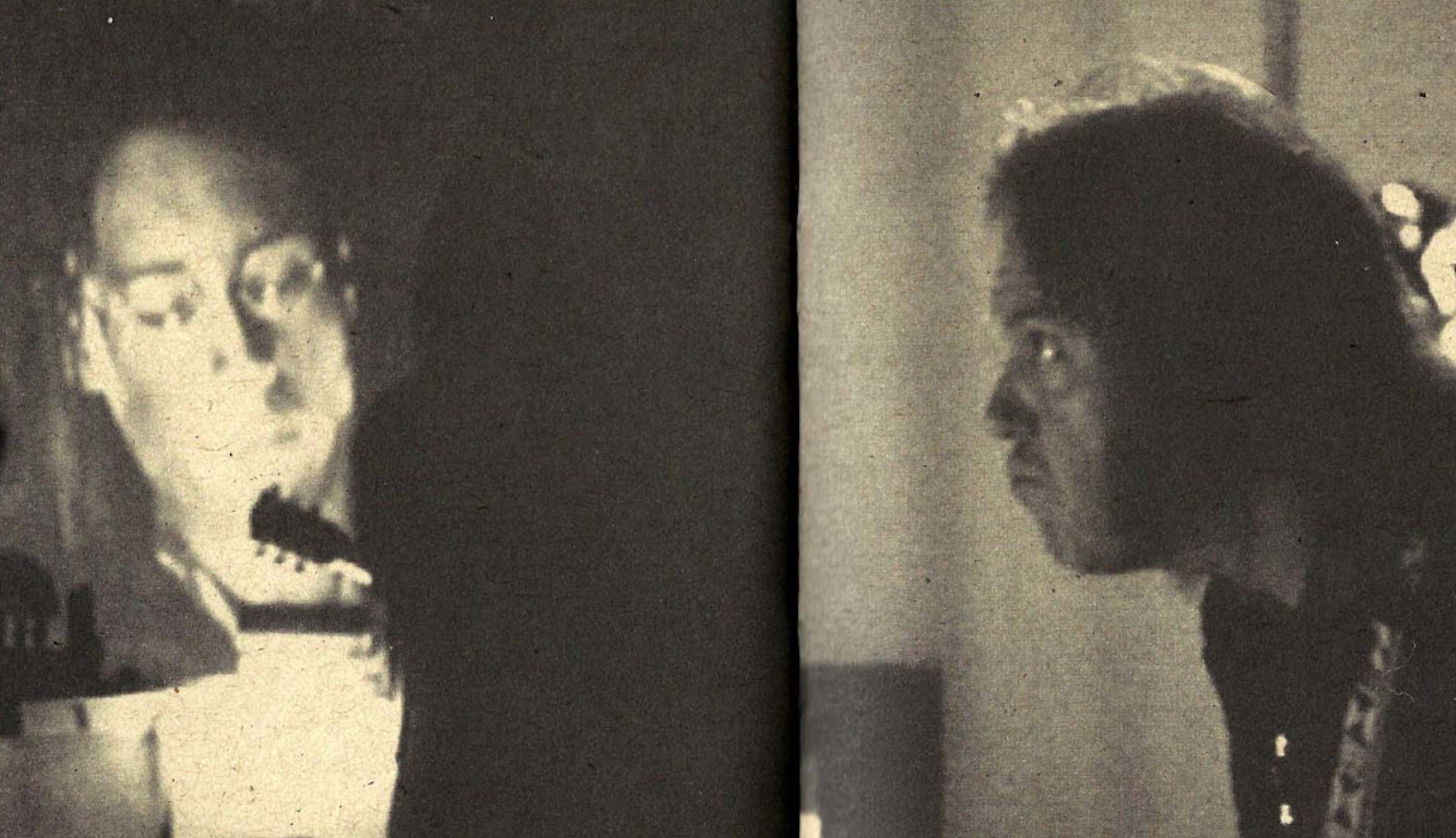
There was some concern on the filmmaker’s end that Neil, playing along to a rough cut of the film, might produce something beautiful that, ultimately, could become unusable if changes were made to the final edit of the picture. Jarmusch shared this worry with the editor, Jay Rabinowitz, during what he thought was a private moment, only to realize Neil had heard them on studio microphones. His refrain? “Don’t worry about it, man. It’s gonna work.”
And it did.
You would think that a song called “Dead Man Theme” might appear on the soundtrack to the film Dead Man, perhaps in a prominent early spot in the tracklist as its theme (just spitballing here). And buddy you’d be wrong. “Dead Man Theme,” as Neil wrote on the Archives, plays “right at the beginning of the picture” but cannot be found on the actual album called Dead Man which Neil made in that warehouse. “An example of something that should have never been left out!” he continued. You could argue the other “Dead Man” variations — 1 through 6, sometimes labeled on the tracklist as “Guitar Solos” — are in fact the same song as the theme because they follow the same chords and general leitmotif. But in fact “Dead Man Theme” is just a little too tidy, just a little too Neil that it’s more atmosphere than composition within the context of the film at all. In other words it’s an amuse-bouche. The rest of Dead Man is the entree.
Listen to it. An acoustic guitar playing B minor and E major — “Out On The Weekend” as hell. A muddy electric guitar crusting it up with curlicue lead lines. We know the moves. It sounds good as hell. And maybe it sounds a little too much like Neil? Or maybe because it opens with that acoustic strumming it was jettisoned in favor of the grungier, spookier, heavier distortion.
“Dead Man, No. 1,” however, takes that same ghostly cowboy melody and plays it through only once, at the end, after four minutes of E minor guitar swishing that sounds like a howling windstorm. The dude knows what he’s doing.
(As a side note, the first time I heard “Organ Solo,” I considered sending a legal notice to Thom Yorke on Neil’s behalf. I mean, Radiohead — named after a Talking Heads song from an actual movie — releases a song literally called “Motion Picture Soundtrack” five years after Dead Man that borrows the entire vibe and general chord progression from Neil, an artist they openly love and cover? Insane but also I guess good artist borrow while great artists steal, etc.)
If I was braver this entire entry would be dedicated to “Dead Man, No. 4,” which runs nearly 15 minutes. It helped me study for my final English oral comprehensive exams in college. It’s helped me so many times while writing on deadline. It is, through its lack of pretension and because it exists solely in the present tense, a masterpiece. But “Dead Man, No. 1” sets such an immediate mood and tone and auditory landscape that I have to celebrate it. “Dead Man, No. 4” is a little too Arc for me to fully love it.
“Dead Man, No. 1,” meanwhile, cultivates dread. Everything about Dead Man, from its title down to the black-and-white print of the film itself, cultivates dread. Yet I don’t experience “Dead Man, No. 1” as bleak. The long spooky intro of wind-whipped guitar strums rises like thick smoke into clouds, yes. But when the clarity arrives, first as a brief parting around three minutes in then as that crackling smattering of notes nearly three minutes later, it’s so vivid that it feels like narcotics hitting. (I imagine.) Glowing sunset cutting through a fog. The last breath of sunlight before midnight arrives with a dead moon in its jaw, and so on.
I’ve been dealing with some realizations lately about myself and my own relationship to dread and catastrophe and wondering how much of it is cyclical, do I put myself in these dark loops because I’m addicted to spinning my wheels, am I so afraid of idleness that I’ll create more hardship just so I have to navigate it, and things like that. Feels good to unpack this! Frankly it feels better than watching the film Dead Man, which has left me in a rattled mood both times I’ve watched it. (Something about violence and depravity, I guess.) But I can simply hear Neil’s winding guitar anytime. It comforts me even as it occasionally suggests gathering darkness. “Dead Man, No. 2,” by contrast, is largely made up of two major chords splashed with reverb, jangling in the breeze like wind chimes. That’s the good shit. And it wouldn’t sound as bright without the of menace of “Dead Man, No. 1.” Everything in balance.
There’s no good segue here but recently I’ve been taking in some good headlines related to Catholicism. In the small city of Olean, a professor of Franciscan studies at St. Bonaventure University, my alma mater, won the Democratic primary for New York’s 23rd congressional district. This fall he’s run against the GOP incumbent, Nick Langworthy, on a platform of universal health care, affordable housing, food security and the general belief that “a good life should not be a luxury.” As we all learn at Bonaventure — literally “good journey” — St. Francis left his privileged life behind in favor of one of service and meaning in communion with his fellow man. He did the work even when it was hard. Pope Leo, who declared 2026 as a special year of St. Francis to commemorate the 800th anniversary of his death, recently sounded a similar message.
“We need you. We need your imagination, your narrative creativity, and your lively thinking. We need these to create spaces of freedom and authenticity, within which divine grace can make the promise of consolation and peace resound.”
He was speaking to writers. This is tempting and easy to use as ego inflation — writers don’t need any more of that — but what he’s really saying is that writing helps spark imagination and empathy with the way others see and think and feel. “Without such empathy, there can be no solidarity, sharing, compassion, or mercy,” he continued.
Pope Leo wouldn’t ever tweet “FUCK AI” but this is basically what he’s saying. And that rules. Don’t let the machines think for you while they line the pockets of the already fabulously wealthy (and miserable). Don’t let them steal the hard work. Do the work. The work is what we have.
Hole up in a San Francisco warehouse and score a twisted meditation on death with guitars and organs and do it three times until you’ve got what you came for. Or whatever your version of that is. Let Neil’s guitar lead the way, like it leads me. Better yet, let Gary Farmer be your guide. His character Nobody has another name in the film: Xebeche, or “He Who Talks Loud, Saying Nothing.” Sounds like AI to me.
“Dead Man, No. 1,” written by Neil Young, from Dead Man (1995)
Neil Young: electric guitar